
Understanding What Michigan Winters Really Do to Your Roof
Michigan winters aren’t gentle. Heavy snow, freezing rain, ice dams, and sudden temperature swings put constant pressure on a roof. These conditions create hidden strain that homeowners often don’t notice until a leak appears.
Our goal is to help you understand what to watch for, how to prevent costly damage, and how to feel confident your home is protected through the coldest months of 2026.
The Freeze–Thaw Cycle: Michigan’s Biggest Roof Stressor
When temperatures bounce above and below freezing, your roof expands and contracts. Over time, this movement can:
- Loosen shingles
- Create gaps around flashing
- Push meltwater under shingles
- Lead to interior leaks or moisture damage
Why it matters: Even a small opening can allow enough water to cause mold, rot, or drywall staining.
How to stay ahead: A winter-ready inspection catches early signs of stress before they become bigger problems, an essential part of the proactive care approach we emphasize at RoofAdvisor.
The Weight of Snow: When Is It Too Much?
While Michigan roofs are built to withstand heavy snow, excessive weight can strain the structure. Wet, dense snow is especially heavy.
General guidance:
- Light, powdery snow: low risk
- Wet, compacted snow: much higher load
- Ice layer under compacted snow: increases weight dramatically
If you notice interior doors sticking, sagging ceilings, or bowing in the roofline, it’s time to call a professional.
Attic Ventilation: Your Roof’s Winter MVP
Ventilation plays a central role in winter roof performance. When warm, trapped attic air has nowhere to escape, it accelerates ice damming and moisture buildup.
Healthy attic ventilation helps:
- Keep roof temperatures consistent
- Reduce ice dam risk
- Prevent mold in the attic
- Extend the overall roof lifespan
This is one of the areas where homeowners often tell us, “No one ever explained this before.” Clear guidance is what sets our RoofAdvisor Approach apart.
Winter Storm Checklist for Michigan Homeowners
After any major storm, a quick visual check can help you catch concerns early.
Look for:
- Missing or lifted shingles
- Ice is building up along the eaves
- Leaks in the attic or upper walls
- Frost on rafters (a sign of high attic moisture)
- Clogged gutters preventing meltwater flow
If something feels “off,” trust your instincts and reach out to a professional. You don’t have to interpret the signs alone.
Ice Dams: What Causes Them and How to Prevent Them
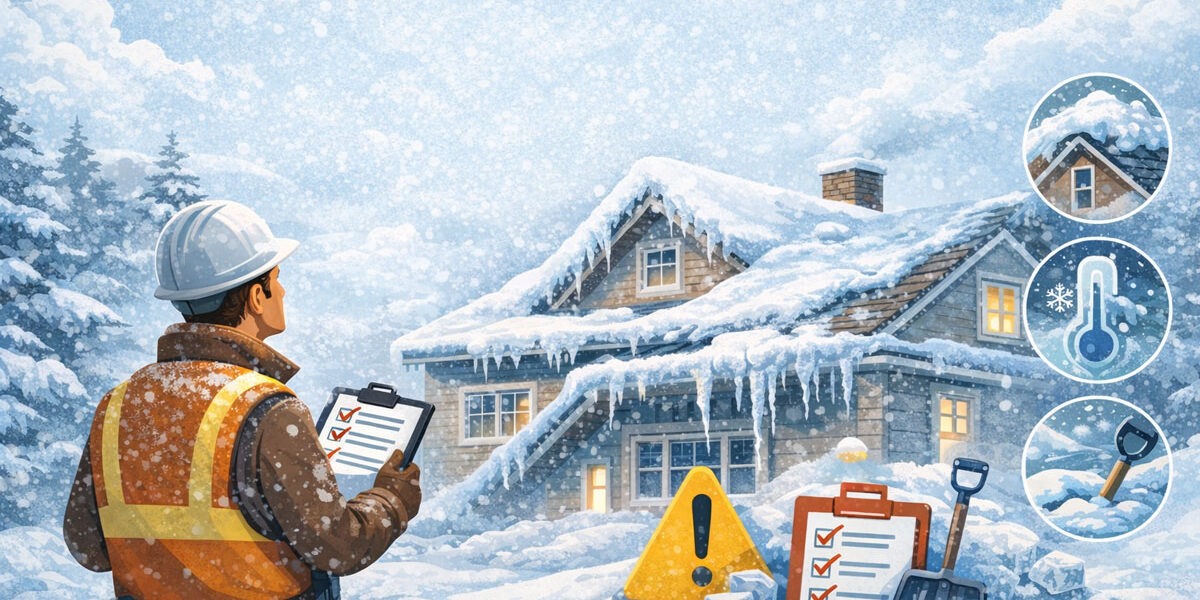
Ice dams form when snow melts on a warm roof and refreezes near the colder eaves. Once that ridge of ice forms, additional melting snow gets trapped and has nowhere to go except under the shingles.
Common warning signs:
- Icicles forming in clusters
- Water stains on the upper interior walls
- Cold spots or drafts in attic rooms
Preventive tips:
- Keep attic insulation consistent and well-distributed
- Ensure your attic is properly ventilated
When to Call for a Professional Roof Inspection
While homeowners can do basic checks, winter roofing issues often develop in areas you can’t safely access. An inspection is your best defense when:
- Your roof is 15+ years old
- You see interior staining
- You experience ice damming yearly
- You’ve had high winds or heavy snow
- Your heating bills suddenly spike
A winter inspection should focus on clarity, prevention, and help you protect your home with confidence.
Your 2026 Winter Roof Action Plan
To protect your home this winter:
- Keep attics properly insulated
- Ensure steady airflow through vents
- Watch for ice buildup after storms
- Remove heavy snow when safe
- Schedule an inspection if you see any warning signs
You deserve a roof that protects your family, and peace of mind knowing what to expect as the weather worsens.