

Most roof issues start out invisible. A small crack in a shingle, a poorly sealed flashing joint, or a loose nail can allow water to enter without any obvious signs from the ground or inside your home.
It’s common for homeowners to delay repairs. Maybe the leak seems minor, or the timing isn’t right, or you’re not sure if it’s really a problem yet. That’s completely understandable.
But here’s what matters: roofing costs usually rise not because contractors are looking to upsell, but because the damage itself spreads. Water doesn’t stay in one place. It moves through insulation, soaks into framing, and eventually shows up on your ceiling or walls. By that point, the repair has grown beyond the roof, and the repair costs go up exponentially.
How Roof Leaks Actually Progress Over Time
When water gets past your roof’s outer layer, it doesn’t just sit there. It follows gravity and the path of least resistance, seeping into insulation, drywall, and wooden framing.
In many cases, homeowners don’t notice anything wrong until the damage has already moved inside. A stain on the ceiling, a musty smell, or peeling paint are all signs that water has been present for days or even weeks.
Understanding this progression helps explain why early action is almost always more affordable than waiting.
0–48 Hours: Early Moisture Intrusion
In the first two days after water enters your roof, the damage is usually limited to the roofing materials themselves and the top layer of insulation or sheathing.
At this stage, repairs are often straightforward. A roofer might replace a few shingles, reseal flashing, or patch a small section of underlayment. These fixes are relatively quick and low-cost.
Catching a leak within the first 48 hours protects your insulation, drywall, and framing from exposure. It also keeps the repair focused on the roof itself, rather than expanding into the interior of your home.
Average repair costs: $360-$1.5k
3–7 Days: Interior Damage Begins
After a few days, water that has entered the roof begins to affect the materials below. Insulation may become compressed or waterlogged. Drywall can start to sag or discolor. Paint may bubble or peel.
Though it can occur sooner, this is generally when mold becomes a real issue. Damp, enclosed spaces are ideal conditions for mold growth, and once it starts, it has to be treated.
Repairs at this stage go beyond the roof. You may need drywall replacement, insulation removal, mold remediation, and interior painting. Costs increase because the scope of work has expanded.
Average repair (without needing mold remediation) costs: $700-$2.4k
1–2 Weeks: Structural and System Impact
By the one- to two-week mark, prolonged moisture exposure can begin to affect your home’s structural elements. Wooden joists, rafters, and framing can soften or rot. Electrical wiring in the affected area may also be at risk.
At this point, repairs often involve partial reconstruction. Sections of framing may need to be replaced. Electrical systems may need inspection or rewiring. The project shifts from a roofing repair to a more involved restoration.
This is when costs rise significantly, not because the original leak was large, but because the damage has had time to spread.
Average repair costs: $1.7k-$6k
2+ Weeks: Major Repairs and Replacement Risk
After two weeks or more, water damage can compromise the structural integrity of your roof and home. In some cases, sections of the roof deck need to be rebuilt. In others, the roof itself may need full or partial replacement.
Interior restoration can include flooring, ceilings, walls, and insulation across multiple rooms. If mold has spread, it can add time and cost to the remediation needed.
At this stage, what began as a small leak has become a major repair project. The longer the delay, the more systems are affected.
Average repair costs: $3.5k-$12k+
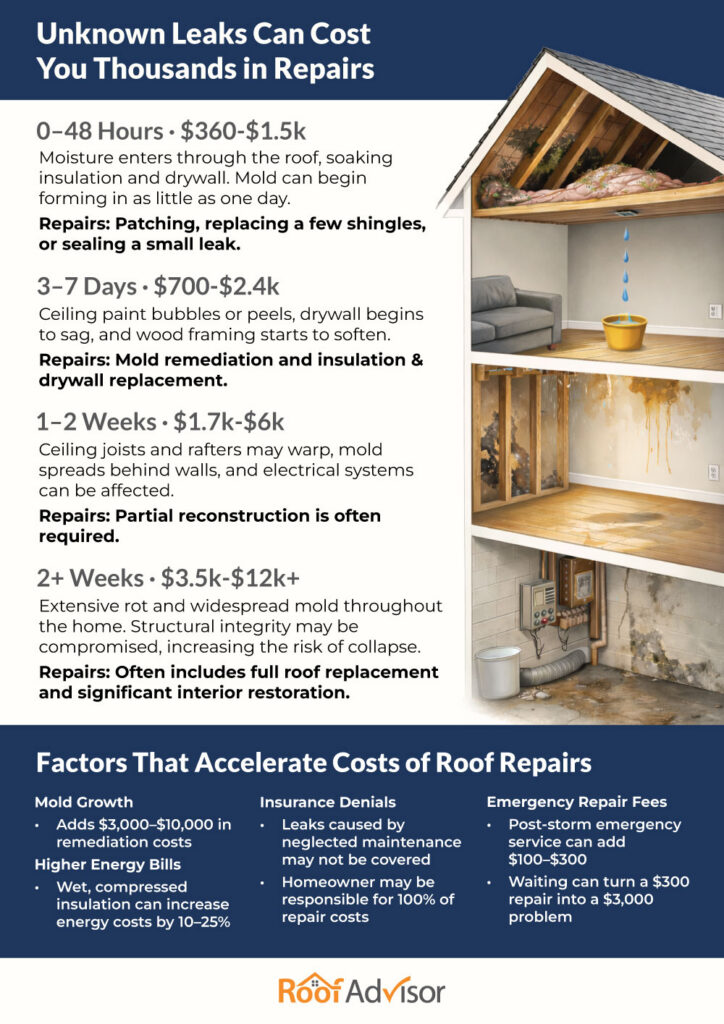
What Accelerates Repair Costs Even Faster
Several factors can accelerate cost increases even more quickly than the timeline above suggests.
Mold growth and remediation: Once mold takes hold, it must be professionally removed. This often requires containment, air filtration, and disposal of affected materials.
Average costs: $3k-$10k
Higher energy bills: Wet or compressed insulation loses its effectiveness. This can lead to increased heating and cooling costs until the insulation is replaced.
Average increase: 10-25%
Emergency and after-hours repair costs: When a leak becomes urgent, emergency repairs are often more expensive. After-hours labor, expedited material delivery, and temporary fixes all add to the total cost.
Average costs: $100-300
Insurance claim denials: Many homeowner insurance policies exclude coverage for damage caused by deferred maintenance. If an adjuster determines that the leak could have been addressed sooner, your claim may be denied.
Why Timing Matters More Than the Size of the Problem
The size of the original issue is less important than how long it goes unaddressed. A small leak caught early can be repaired in an afternoon. The same leak, left alone for two weeks, can require days of work and thousands of dollars in restoration.
Planned repairs are almost always more affordable than emergency responses. When you schedule an inspection and address problems on your terms, you control the scope and the cost.
Waiting doesn’t make the problem go away. It just gives it time to grow.
The Bottom Line: Small Repairs Now vs. Large Bills Later
Roof repairs don’t get cheaper with time. What starts as a minor fix can quickly turn into a major expense once water has time to spread through your home’s structure.
The good news is that most roof problems are manageable when caught early. A simple inspection can identify issues before they become costly, and a timely repair can protect your home from far more expensive damage down the road.
If you’ve noticed any signs of a leak, water stains, missing shingles, or ceiling discoloration, it’s worth having a professional take a look. The cost of waiting almost always exceeds the cost of acting.


