
Fortified Roofing
A Complete Roofing System Built for Harsh Weather
RoofAdvisor is trained by GAF and certified to install FORTIFIED roofing systems. As a GAF Presidents Club and Master Elite roofing contractor, we help Southeast Michigan homeowners compare a standard roof replacement with a roofing system specifically designed for harsher weather.


Severe weather rarely attacks just one part of a roof.
High winds can lift roof edges. Hail can damage the roof covering. Wind-driven rain can find small openings. Once the surface is compromised, the strength of the roof deck, the quality of the water barrier, the edge details, the vents, and the installation process all begin to matter.
A FORTIFIED Roof is built for that moment.
It is not just an upgraded shingle or a stronger-looking roof. It is a complete roofing system built according to severe-weather resilience standards developed by the Insurance Institute for Business & Home Safety (IBHS). Those standards are designed to strengthen the vulnerable areas where roofs often fail during high winds, hail, and wind-driven rain.

Build the Roof You Wish You Had Before the Last Storm
A standard roof replacement restores your roof. A FORTIFIED Roof rebuilds it with the next severe-weather event in mind.
Most roofs are built to meet code and protect a home under normal conditions.
FORTIFIED starts with a different question:
What can be done to help a roof perform better when severe weather exposes the weak points of an ordinary roofing system?
To answer that question, IBHS studied real-world storm damage and construction methods to identify how roofs fail. Those findings became the basis for FORTIFIED Roof standards.
The result is a roofing approach that focuses on more than the visible roof covering. FORTIFIED addresses the roof deck, roof edges, sealed water protection, vents, penetrations, and the documentation required to verify the work.
For homeowners, the promise is simple:
A FORTIFIED Roof is designed to reduce the ways severe weather can turn roof damage into home damage.
What Makes a FORTIFIED Roof Different?
FORTIFIED is not about buying a special shingle. It is about building the entire roof differently in the places severe weather is most likely to expose a weakness.
A traditional roof replacement can be well installed and still be built around normal code requirements. A FORTIFIED Roof follows a defined resilience standard with additional installation details and independent verification.
| Standard Roof Replacement | FORTIFIED Roof™ |
|---|---|
| Built to meet code | Built to meet a severe-weather resilience standard |
| Often focused on the visible roof covering | Strengthens the roof as a complete system |
| Standard deck preparation | Enhanced roof deck attachment |
| Standard underlayment approach | Approved sealed roof deck method |
| Standard edge details | Reinforced edge and starter-strip requirements |
| Contractor quality control | Independent FORTIFIED evaluation |
| Manufacturer warranty options | Potential enhanced warranty options on qualifying systems |
This is why FORTIFIED matters most during a roof replacement. Once the old roofing system is removed, the parts of the roof that are normally hidden become accessible. That is the best time to decide whether additional resilience belongs in the new roofing system.
Real Protection Starts Beneath the Shingles
A FORTIFIED Roof adds protection beneath the surface, helping defend your home even if a storm damages the roofing material you can see.
Shingles are the most visible part of the roof, but they are not the only part protecting the home.
During severe weather, wind can damage or remove shingles and expose the materials underneath. When that happens, the roof deck and water-management layers become critical.
FORTIFIED strengthens those hidden areas.
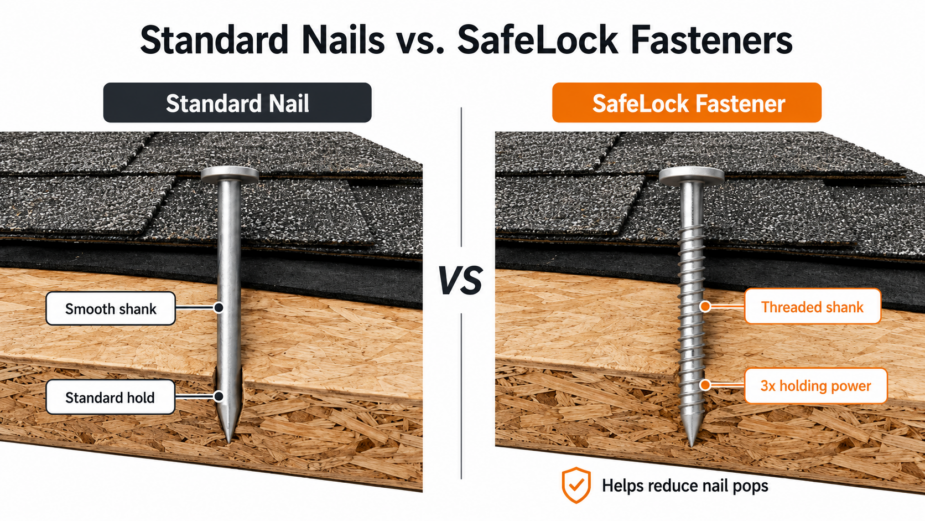
Stronger Roof Deck Attachment
FORTIFIED requires enhanced roof deck attachment using specific ring-shank nails and an installation pattern designed to create a stronger connection between the roof deck and the structure below.
That stronger attachment is intended to help keep the roof deck in place when high winds create uplift forces on the roof.
For a homeowner, the benefit is straightforward:
The roof has a stronger connection to the home it is protecting.
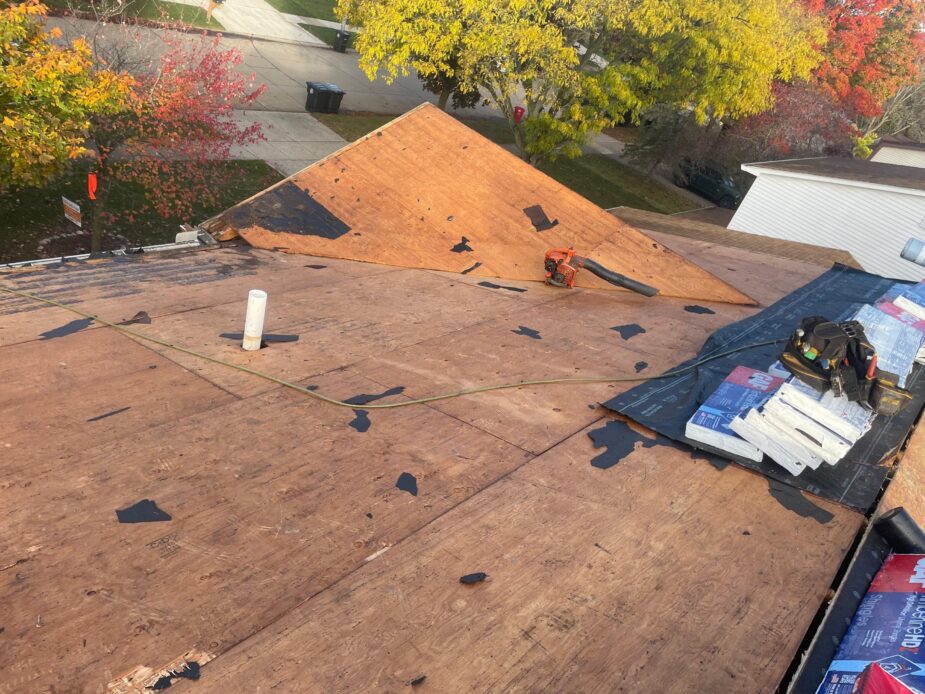
Sealed Roof Deck Protection
On a typical roof, shingles and underlayment provide the primary protection against rain. But if severe wind damages or removes those surface materials, water can reach the small gaps between pieces of roof decking.
FORTIFIED requires an approved sealed roof deck method that helps prevent water from passing through those gaps.
That means if shingles are damaged during a storm, water does not have the same open path into the attic through deck seams and vulnerable openings.
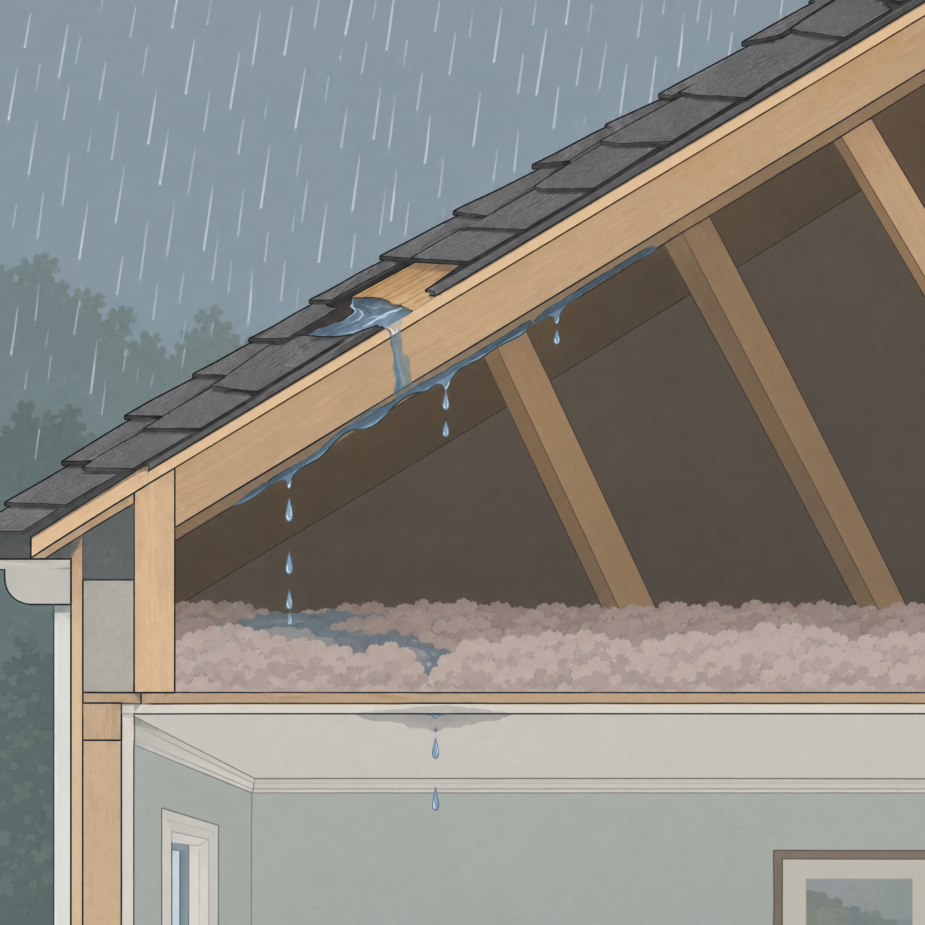
More Protection When the Surface Is Compromised
When shingles blow off a traditional roof, the underlayment becomes the next line of defense. If that layer is also damaged, displaced, or overwhelmed, water can reach the roof deck and enter through seams, nail holes, penetrations, and other openings.
Once water reaches the attic, the damage can spread beyond the roof itself into insulation, ceilings, drywall, electrical systems, and interior finishes.
A sealed roof deck gives the home an additional layer of water management beneath the visible roofing system.
A Stronger Shingle Is Helpful. A Stronger Roofing System Is Better.
Choosing a better shingle can improve one part of your roof. FORTIFIED is designed to strengthen how the roofing system works as a whole.
The right shingle matters, especially when hail is a concern.
But shingles are only one part of the system.
An impact-resistant shingle focuses primarily on how the roof covering responds when hail or debris strikes it. That can be valuable, but the shingle still depends on the roof deck, edge details, sealed water protection, vents, and installation quality beneath and around it.
A roof can have an impact-resistant shingle and still be vulnerable if wind gets beneath the roof edge, if the deck attachment is weak, or if water has a direct path through the decking after the surface is damaged.
FORTIFIED approaches those issues as connected parts of the same system.
For some Southeast Michigan homeowners, the strongest approach may be to combine a FORTIFIED installation with qualifying impact-resistant shingles. That can add resilience against both wind-related failure points and hail damage.

Do I Need Special GAF Shingles for a FORTIFIED Roof?
GAF manufactures several products that can be used as part of compliant FORTIFIED roofing systems. Which products make sense depends on the home’s design, location, roofing system, and the level of protection being pursued.
RoofAdvisor’s role is to help you understand those choices before you decide.
We are not here to add upgrades just because they sound impressive. We are here to explain what changes, what it costs, and what additional protection the system is designed to provide.
Michigan Storms Are Already Testing the Weakest Parts of Our Roofs
A roof does not need hurricane winds to experience multiple failure points. High winds, tornadoes, hail, severe thunderstorms, and wind-driven rain can expose many of the same vulnerabilities FORTIFIED was designed to strengthen.
Southeast Michigan does not need hurricane conditions to experience the kinds of roof damage FORTIFIED is designed to reduce.
Our region sees severe thunderstorms, damaging straight-line winds, tornadoes, hail, and wind-driven rain. These events can lift shingles, loosen roof edges, damage vents, expose decking, and create pathways for water intrusion.
Once wind damages the roof covering, the layers underneath become critical.
That is where FORTIFIED is different. It addresses vulnerable areas with enhanced roof deck attachment, sealed roof decking, stronger roof-edge requirements, qualified vents, and other installation standards intended to help the roofing system remain intact and limit water intrusion when severe weather damages the surface.
For homeowners dealing with storm damage, this creates an important question:
If you are already replacing the roof, do you want to rebuild the same way — or rebuild with the next storm in mind?
The Edge of the Roof Is Often Where Storm Damage Begins
Roof edges are one of the first places wind can begin to work underneath a roofing system.
Once wind gets below the roof covering, uplift pressure can start separating shingles, starter strips, and edge materials from the roof deck. What begins as a small lifted area can spread farther across the roof and allow more wind and water into the system.
FORTIFIED addresses this vulnerable area with specific requirements for edge metal, starter-strip attachment, and installation details intended to create a stronger perimeter.
For homeowners, this is not just about a stronger drip edge.
It is about building the roof perimeter with greater attention to one of the places storm damage often begins.
Are Roof Vents Part of the FORTIFIED Standard?
Yes.
FORTIFIED also addresses roof vents because anything penetrating or attached to the roof can affect performance during severe weather.
Ridge vents and off-ridge vents used in FORTIFIED installations must meet certain testing requirements. This helps reduce the chance that vents become a weak point when wind and rain are testing the roof.
You Should Not Have to Wonder Whether the Hidden Work Was Actually Done
You do not simply have to trust that your roof was built to the FORTIFIED standard. The qualifying work must be documented and independently verified.
Many of the details that make a FORTIFIED Roof different are hidden once the project is complete.
Roof deck fastening, sealed deck protection, starter strips, edge details, underlayment, vents, and other installation requirements may all be covered by the finished roofing system. Once the shingles are installed, a homeowner cannot simply look at the roof and confirm that every required step was completed correctly.
FORTIFIED addresses that problem by building independent verification into the process.
Who Verifies a FORTIFIED Roof?
As RoofAdvisor installs your roofing system, a third-party Certified FORTIFIED Evaluator works with the project team to document key parts of the installation.
That documentation can include photographs of required installation details, product labels and materials, roof deck attachment, sealed roof deck methods, and other components that must meet the applicable FORTIFIED standard. IBHS requires documentation to be tied to the individual property, and inadequate documentation can prevent a designation from being issued.
The evaluator then submits the required documentation to IBHS for review.
IBHS reviews the submitted information and determines whether the applicable FORTIFIED requirements have been met. If the project qualifies, IBHS issues the FORTIFIED designation.
That means the designation is not based only on the roofing contractor saying the work was completed properly.
There is a documented record of the installation and an independent review behind it.
Is the FORTIFIED Evaluator Part of RoofAdvisor?
No. FORTIFIED Evaluators are independent third parties trained in the program requirements.
RoofAdvisor coordinates with the evaluator during the project, but the evaluator’s role is separate from the contractor’s. IBHS states that homeowners should also remain free to choose their own evaluator even when a contractor has an evaluator they regularly work with.
That separation adds another level of accountability to the process.
How Long Does a FORTIFIED Roof Designation Last?
A FORTIFIED Roof designation is valid for five years.
After that period, the home must go through the applicable redesignation process to maintain an active designation.
The five-year period matters because a roof can change over time. Storm damage, repairs, alterations, aging components, or other changes can affect whether the roofing system still meets the requirements that supported the original designation.
A redesignation inspection provides an opportunity to verify that the qualifying conditions are still in place.
A Smart Option for Storm-Damaged and Weather-Exposed Homes
If storm repair is about recovering from damage, a FORTIFIED Roof is about rebuilding with future severe weather in mind.
FORTIFIED is not an automatic upgrade for every home.
It is an option to evaluate when the home, roof design, location, and homeowner priorities make additional resilience worthwhile.
A homeowner may want to consider FORTIFIED more seriously if:
- The roof already needs replacement.
- The home has experienced storm damage.
- Nearby homes have had wind, hail, or roof-covering damage.
- The home is exposed to open terrain or frequent high winds.
- The homeowner wants additional protection against water intrusion after roof-covering damage.
- Long-term ownership is likely.
- Independent verification is important.
- The homeowner is already considering upgraded shingles or other resilience improvements.
FORTIFIED may be less compelling if the homeowner plans to sell soon, if the additional requirements add substantial cost relative to the home’s needs, or if existing structural conditions make the upgrade impractical.
That is why RoofAdvisor treats FORTIFIED as a choice to understand, not a product to push.
Is a FORTIFIED Roof Worth the Additional Cost?
That depends on your home, your roofing system, and what you value in the replacement.
FORTIFIED requires additional materials, installation steps, documentation, and independent evaluation. This can cause the project to cost more than a conventional roof replacement.
For the right homeowner, those added steps can be meaningful because they address parts of the roof that are difficult or impossible to improve after the new roof is installed.
The best time to make that decision is before the new roof is installed, while the components that FORTIFIED addresses are accessible.
RoofAdvisor can show the FORTIFIED-related improvements as part of your roofing proposal so you can compare the cost, benefit, and long-term value before deciding.
How Much More Does a FORTIFIED Roof Cost?
There is no single universal upgrade price.
Roof size, roof design, current decking, materials, required improvements, and evaluator costs can all affect the project.
RoofAdvisor can evaluate your roof, identify which FORTIFIED-related improvements apply, and help you compare a standard replacement with a FORTIFIED roofing system.
Stronger Protection May Come With Benefits Beyond the Roof
The primary purpose of FORTIFIED is resilience.
Depending on where you live and who insures your home, there may be financial benefits available for qualifying systems.
Those benefits should be considered a possibility, not a promise.
Can a FORTIFIED Roof Lower My Homeowners Insurance?
Potentially.
Insurance discounts, grants, and other incentives are available in some locations. However, GAF and IBHS make clear that these benefits are not guaranteed and vary based on location and program availability.
Michigan homeowners should speak with their insurer to determine whether a FORTIFIED designation can affect their policy.
Does FORTIFIED Come With a Better GAF Warranty?
A FORTIFIED Roof installed by an eligible GAF Master Elite contractor may qualify for a GAF Golden Pledge or President’s Club Limited Warranty along with benefits provided through GAF’s FORTIFIED warranty addendum, subject to GAF’s eligibility requirements, terms, and restrictions.
RoofAdvisor can explain which warranty options apply to the roofing system being proposed.
What Happens if I Choose a FORTIFIED Roof?
For a qualifying project, the process generally includes:
- Roof evaluation. RoofAdvisor determines the existing condition and identifies what the roofing system needs.
- FORTIFIED planning. We identify the applicable products, details, and installation requirements.
- Clear proposal. You compare the roofing system, upgrades, costs, and warranty options before work begins.
- FORTIFIED installation. RoofAdvisor installs the system according to applicable requirements.
- Documentation and evaluation. A Certified FORTIFIED Evaluator verifies the required installation details.
- Designation. IBHS issues the designation when the qualifying requirements have been satisfied.
The technical process may be more detailed.
Your experience should not have to be.
Replace Your Roof With the Next Storm in Mind
A roof replacement gives you a rare opportunity.
Once the old roofing system is removed, RoofAdvisor can see and access components that may not be exposed again for decades. That makes this the right time to decide whether added storm resilience belongs in your roofing plan.
If your roof has been damaged by severe weather, if your neighborhood has seen repeated storm activity, or if you simply want a more resilient roofing system, RoofAdvisor can help you evaluate whether FORTIFIED makes sense for your home.
A FORTIFIED Roof is not about making a roof storm-proof. It is about building a stronger, better-documented roofing system for the weather that damages roofs in the first place.
Frequently Asked Questions
About FORTIFIED Roofs
What is a FORTIFIED Roof?
A FORTIFIED Roof is a roofing system built according to severe-weather resilience standards developed by the Insurance Institute for Business & Home Safety. It includes requirements for areas such as roof deck attachment, sealed roof deck protection, roof edges, penetrations, vents, and roof covering. A qualifying installation must be independently verified to receive a FORTIFIED designation.
Who created the FORTIFIED program?
FORTIFIED was developed by IBHS, an independent nonprofit research organization supported by property insurers and reinsurers. GAF works with IBHS to train qualifying contractors and provide products that can meet FORTIFIED requirements.
Does a FORTIFIED Roof prevent storm damage?
No roof can guarantee that severe weather will not cause damage. FORTIFIED is designed to reduce vulnerabilities identified through IBHS severe-weather research and improve the roofing system’s resilience.
Is a FORTIFIED Roof the same as an impact-resistant roof?
No. An impact-resistant roof covering focuses primarily on hail or debris impact. FORTIFIED looks at the broader roofing system, including the roof deck, sealed water protection, roof edges, vents, and installation verification.
Does a FORTIFIED Roof require impact-resistant shingles?
Not necessarily. Impact-resistant shingles are associated with the optional FORTIFIED Hail Supplement, which has additional requirements based on IBHS hail-impact ratings.
Who inspects a FORTIFIED Roof?
A Certified FORTIFIED Evaluator independently verifies that the applicable requirements have been completed. IBHS issues the designation after the installation and documentation meet the program requirements.
How long is a FORTIFIED designation valid?
A FORTIFIED Roof designation is valid for five years. A redesignation inspection is required to renew it.
Is my home a good candidate for a FORTIFIED Roof?
Your home may be a good candidate if the roof already needs replacement, if the property has experienced storm damage, if the home is exposed to high winds or severe weather, or if you want added protection and independent verification. RoofAdvisor can inspect your roof and help you decide whether FORTIFIED is worthwhile for your situation.
Proudly Serving Communities in SE Michigan & Beyond
We’re proud to serve homeowners and businesses across Southeast and Mid-Michigan with dependable roofing solutions. Our team provides the same attention to detail and quality workmanship in every community we visit, whether you need a simple roof repair, a proactive roof inspection, or a complete roof replacement to boost your curb appeal.
Cities we regularly work in

This map represents our residential service area. We now offer our multi-family roofing services to the entire state!